The engineering principles behind our extruders — modular geometry, self-wiping mixing, wear resistance, process protection and configurable control.
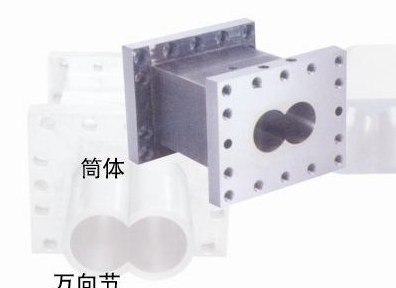
A building-block system of screw elements and barrel sections lets each machine be arranged for a specific process, and rebuilt as requirements change.
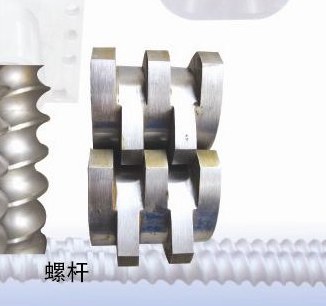
Intermeshing co-rotating screws are self-wiping, giving consistent residence time, effective dispersive and distributive mixing, and clean product changeovers.
Wear-resistant screw and barrel material options, including tool-steel elements and carbide-lined barrels, are available for abrasive filled and reinforced compounds.
Zoned barrel heating and cooling with responsive temperature control maintains the melt profile required by the compound.
Standard and high-torque series allow output and specific energy to be matched to the compound, from gentle to high-intensity processing.
Standard-panel, simulated-panel or PLC control with lubrication, feeding, pressure and over-current interlocks to protect machine and product.
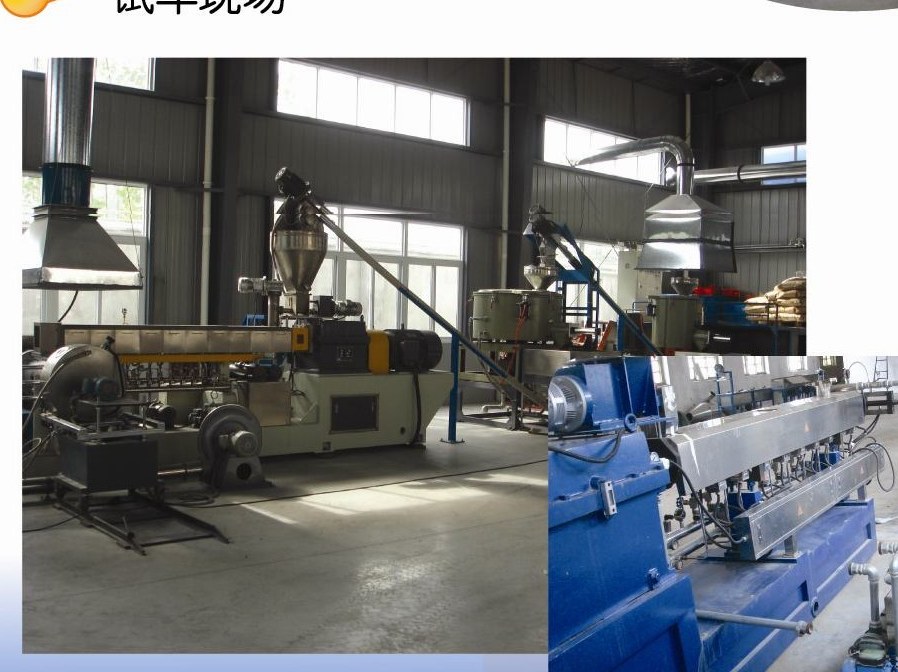
Before shipment, machines are assembled and run in-house, and key components are inspected against the build specification. Where a full line is supplied, trial running can be arranged so that mechanical, thermal and control functions are confirmed before packing. Wear parts, screw elements and control components are documented to support maintenance over the life of the equipment.
Certification and third-party approvals are provided on request where documentary evidence exists. Please ask our team for the current status relevant to your market.
The parts that wear are specified in named steels and alloys, heat treated to a stated hardness — the reason the machines hold their geometry under abrasive, filled and reinforced compounds.
| Component | Material | Treatment / hardness |
|---|---|---|
| Screw core shaft | 45CrNiMoVA | Alloy steel shaft, involute spline connection |
| Screw elements | W6Mo5Cr4V2 high-speed tool steel | High-temperature vacuum hardening, HRC 62–64 |
| Barrel body | #45 steel | Base body, zoned for heating and cooling |
| Barrel bore liner (figure-eight bore) | a-101 (Fe-Cr-Ni-B + carbide) bimetallic alloy | Wear-proof liner, HRC 60–64 |
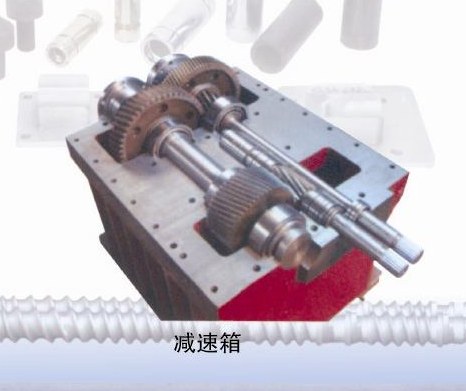
| Gearbox | Hardened, precision-ground gear teeth; imported key bearings | Torque-distribution design with interlocked lubrication |
Where the application demands it — highly corrosive, highly abrasive or high-temperature duty — alternative corrosion-resistant, wear-resistant or high-temperature materials and special heat treatments are supplied.
Each screw size is offered in up to four classes, so specific energy input can be matched to the compound rather than compromised. T/A³ is specific torque referenced to the centre distance between the shafts.
| Class | Character | Screw speed | Specific torque |
|---|---|---|---|
| A | Normal | n ≤ 500 r/min | T/A³ < 6 |
| B | High speed | n ≥ 600 r/min | T/A³ < 6 |
| C | High torque | n ≤ 500 r/min | T/A³ > 8 |
| D | High speed and high torque | n ≥ 600 r/min | T/A³ > 8 |
Feeders are available as single-screw, twin-screw (both intermeshing and non-intermeshing) and spring types to suit different bulk-flow behaviour. Alongside standard volumetric metering, loss-in-weight feeders are supplied with accuracy to 0.5%.
Granulating options cover water-trough strand pelletizing, air-cooled strand pelletizing, air-cooled die-face cutting, water-ring die-face cutting, eccentric hot-face cutting with special cooling, and underwater pelletizing. The method is recommended from your material characteristics and process requirements rather than offered as a fixed default.
