Complete, configured lines built from feeding, extrusion, pelletizing and downstream equipment — arranged around your material, output and pellet specification.
Twin-screw compounding with water-cooled strand pelletizing for filler incorporation, polymer blending and fiber reinforcement.
Hot-face cutting with water-ring cooling for filled systems and polymer blends at higher outputs.
Hot-face cutting with air cooling for heat-sensitive and lightly filled compounds and masterbatch.
One-step and tandem wood-plastic composite lines with strong venting for high natural-fiber loadings.
Tandem extrusion for XLPE, silane-crosslinkable and low-smoke halogen-free cable compounds.
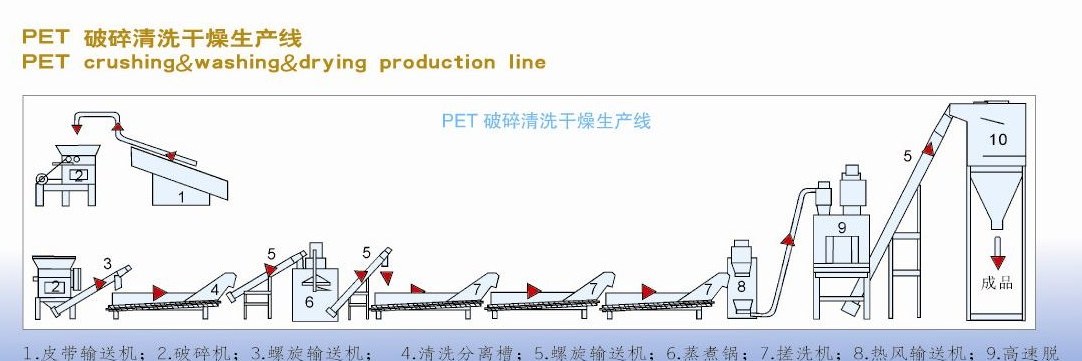
Film reclamation and PET crushing, washing and drying lines for post-industrial and post-consumer material.
Compounding of thermosetting plastics and powder-coating materials with controlled, low-temperature processing.
Banbury mixer feeding a twin-screw or single-screw extruder with eccentric hot-face pelletizing.
Strand or chain pelletizing with air cooling for compounds that must not contact water.
Each line below is listed in process order, as it is built and commissioned, with the layout drawing from our equipment catalogue. Equipment is added, removed or resized to suit your material, output and plant layout.
Sequence: high-speed mixer → solids conveyor → main feeder → SJSH twin-screw extruder → water trough → air knife → strand pelletizer → product container.
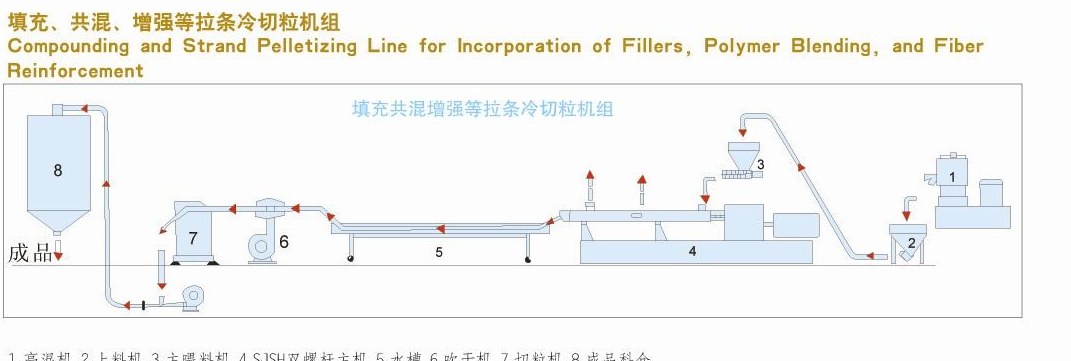
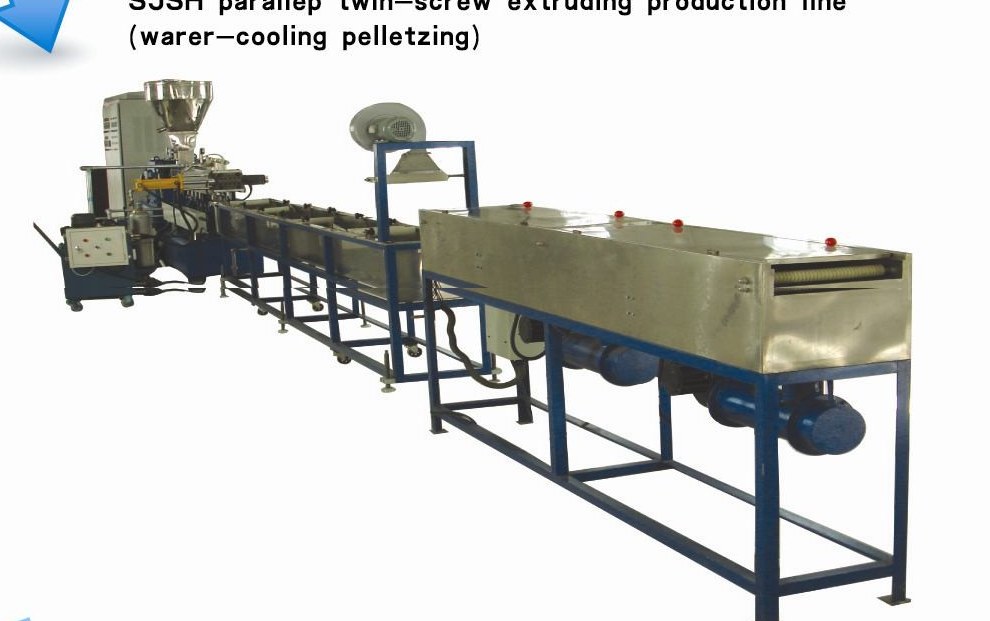
Used for: fibre reinforcement of PP, PA, PBT, ABS, AS, PC, POM, PPS and PET with glass or carbon fibre; polymer blending (PC+ABS, PA+ABS, CPE+ABS, PP+EPDM, PA+EPDM, PP+SBS); filler incorporation of calcium carbonate, talc, titanium dioxide and carbon black into PE, PP and EVA; cable sheathing and insulation compounds in LDPE, HDPE, LLDPE and MDPE, including radiation-crosslinkable and optical-fibre protection compounds; heat-shrinkable compounds; PPR pipe and crosslinked-pipe compounds; high-concentration colour masterbatch; flame-retardant, anti-static and anti-bacterial masterbatch; and starch-carrier masterbatch for degradable polymers.
Sequence: metering feeder → twin-screw extruder → air-cooled hot-face pelletizer → cyclones → vibrating sieve.
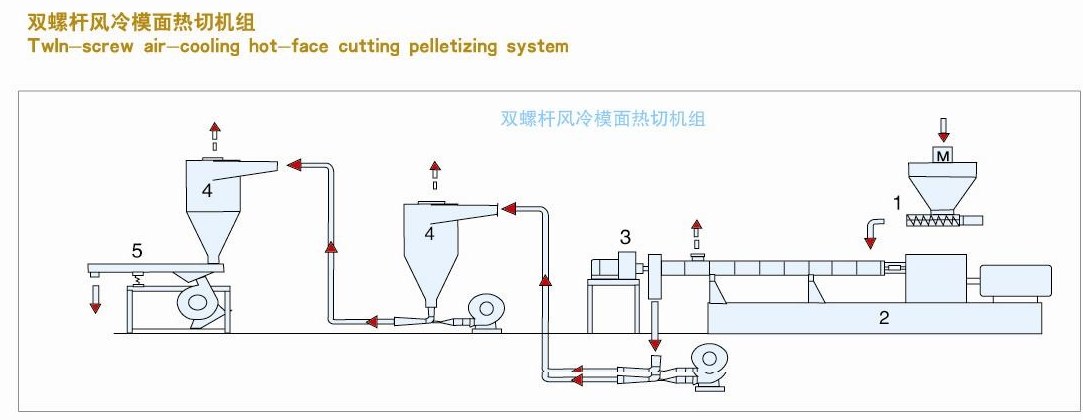
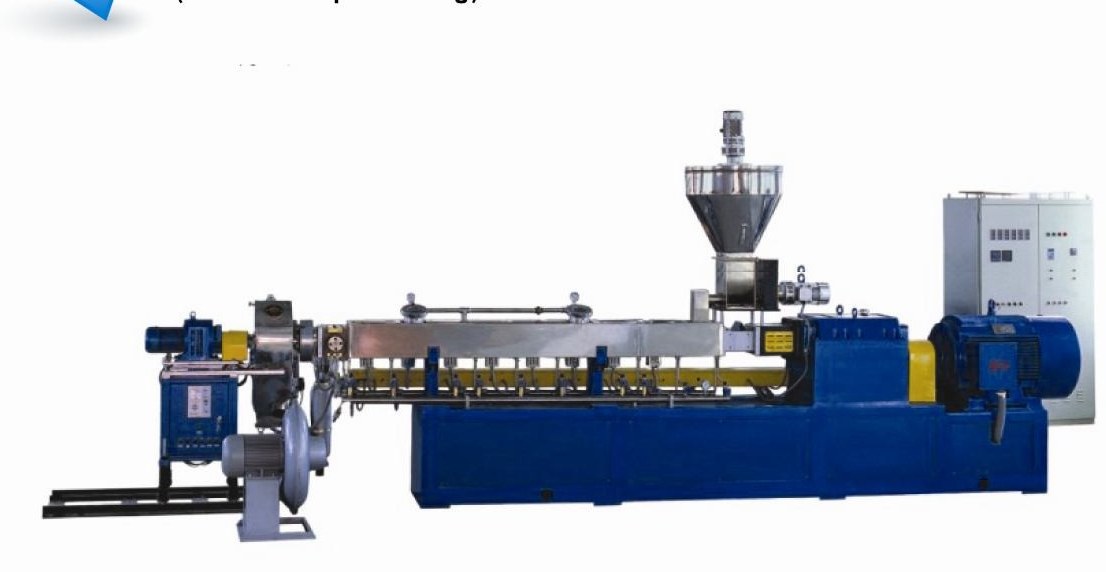
Used for: reinforcing modification of PE and EVA with calcium carbonate, talc, titanium dioxide and carbon black; degradable masterbatch of PE and PS with starch and additives; flame-retardant masterbatch of PE and EVA with antimony trioxide, magnesium hydroxide and aluminium hydroxide.
Sequence: high-speed mixer → main feeder → side feeder → SJSH twin-screw extruder → water-ring granulator → centrifugal dewatering → vibrating sieve → product container.
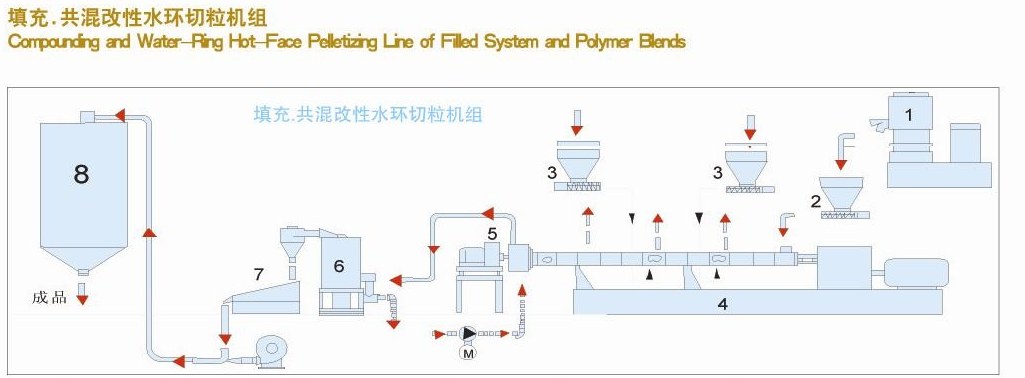
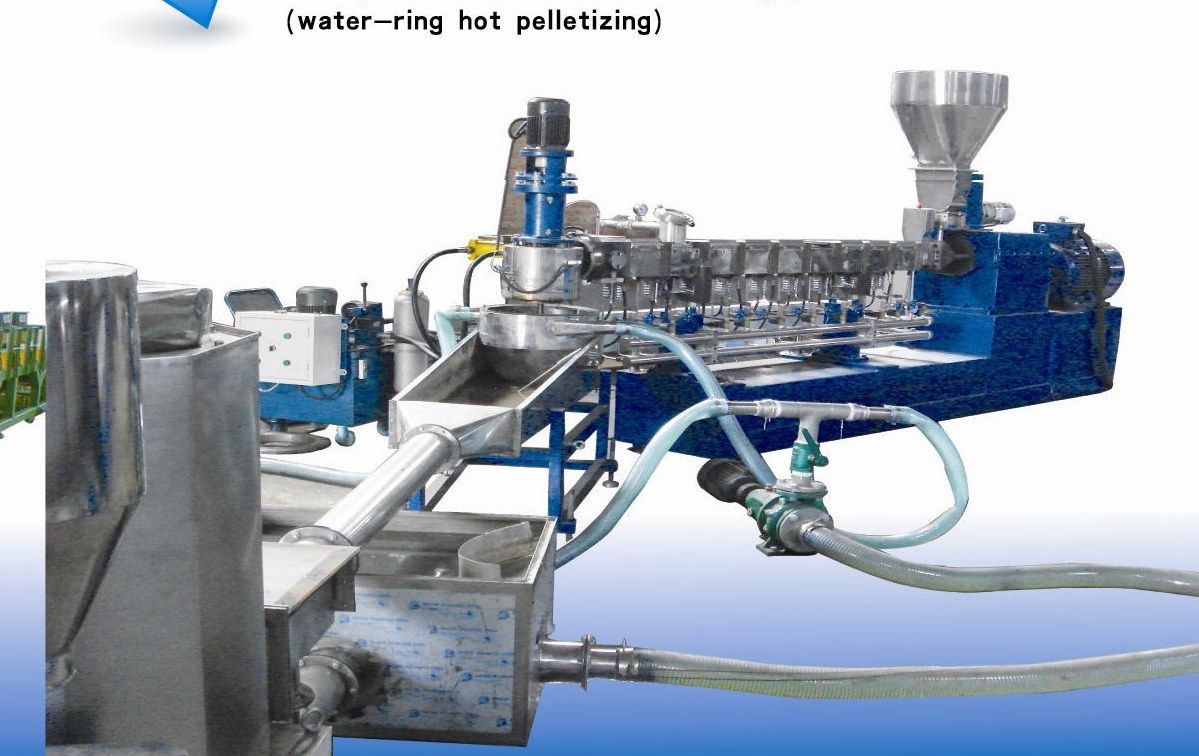
Used for: PE and EVA filled with calcium carbonate, talc, titanium dioxide or carbon black; cable sheath and insulation compounds; radiation-crosslinkable and heat-shrinkable cable compounds; PPR pipe and crosslinked-pipe compounds; TPR and TPU thermoplastic elastomers; EVA and hot-melt adhesives; colour concentrates and flame-retardant masterbatch; and PE, PP or PS carrier masterbatch for degradation applications.
Sequence: high-speed mixer → main feeder → side feeder → SJSH twin-screw extruder → air-cooled conveyor chain → strand pelletizer → product container.
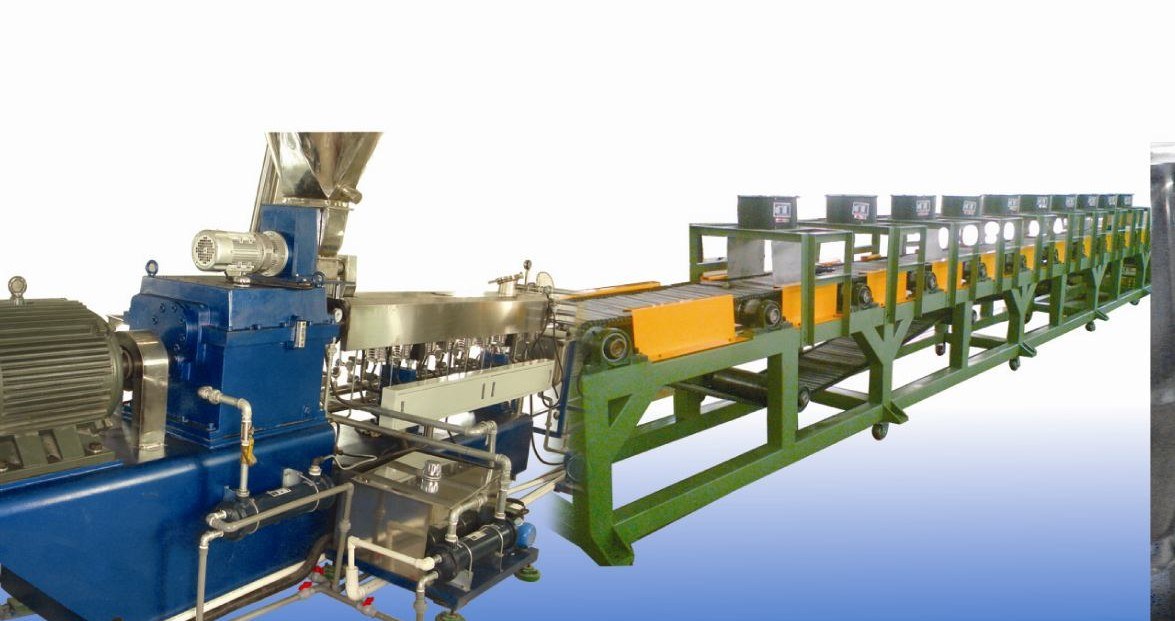
Used for: compounds that must not contact water — hygroscopic engineering polymers, hot-melt adhesives and certain masterbatch systems.
Sequence: metering feeder → cramming feeder → twin-screw extruder → single-screw extruder → air-cooled hot-face cutter → cyclone → fluidising bed.
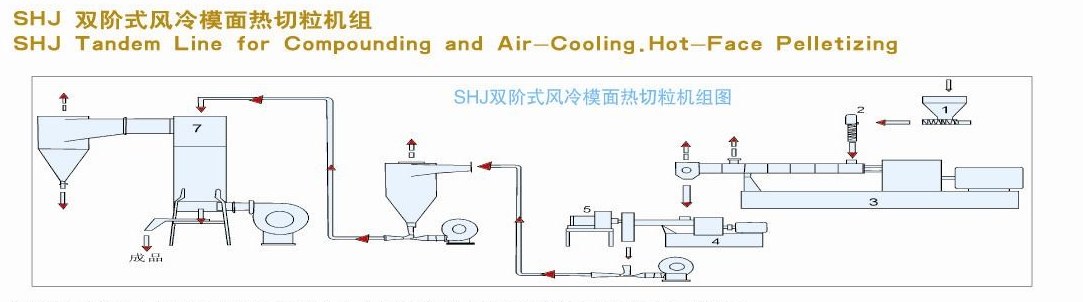
Used for: PVC cable compound, shoe sole compound, transparent containers, medical-grade material, EVA shielding cable compounds and carbon-black masterbatch in PE and EVA. Combining the high shear of the twin-screw with the low speed, low temperature and low shear of the single-screw makes this the first choice for heat- and shear-sensitive materials.
Sequence: high-speed mixer → SJSH twin-screw extruder → SJ single-screw extruder → die → water cooling → haul-off → cutter → finished profile.
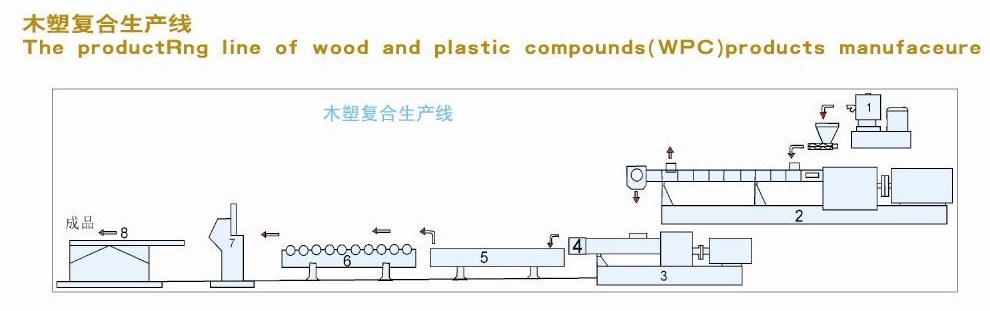
Used for: PE- and PP-based wood-plastic formulations with high wood-flour loadings, decking, profile and board production.
Sequence: PE resin silo, anti-oxidant silo and DCP tank → loss-in-weight feeder and loss-in-weight pump → twin-screw extruder → single-screw extruder → eccentric fog-jetting cutter → fan → fluidising bed → product container → automatic bagging.
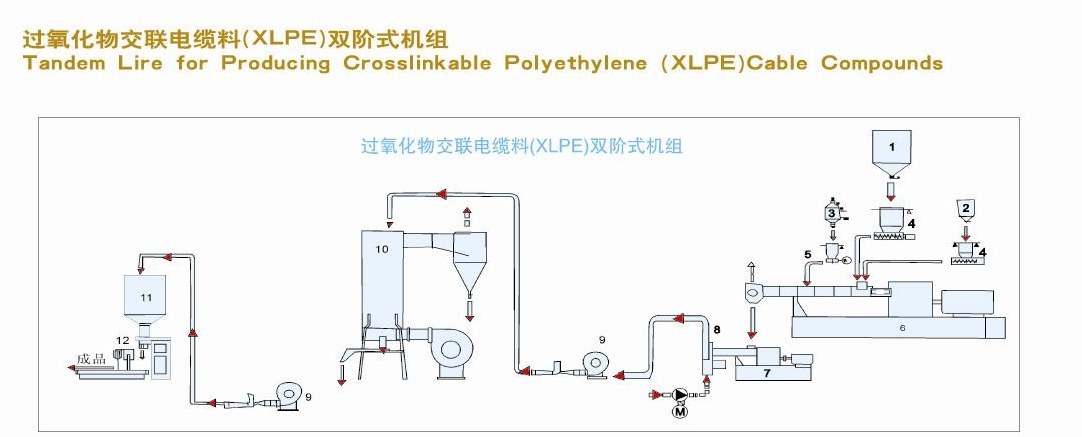
Why tandem: low-pressure, short-channel die geometry combined with eccentric die-face cutting lets PE resin, antioxidants and peroxides be mixed at low temperature, so premature crosslinking is avoided.
Sequence: material conveying belt → film breaker → single-screw venting extruder → vertical water-ring granulator → centrifugal dewatering → vibrating sieve → product container.
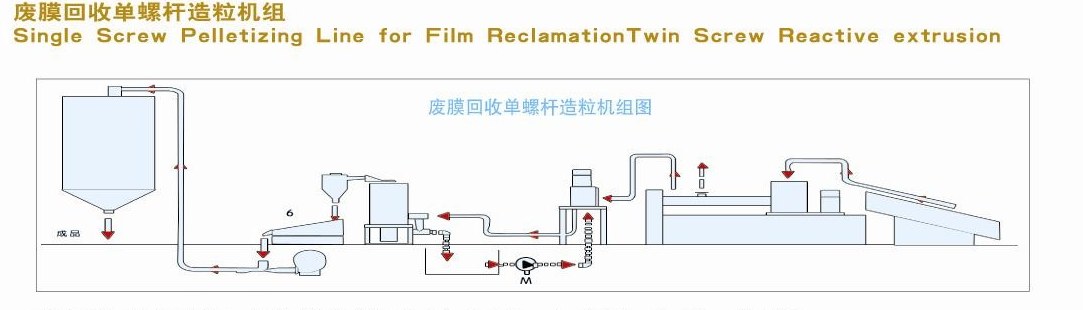
Used for: reclaiming PE, PVC, PET and other films — conveying, breaking, feeding, melting, venting, pressure build-up, filtering and pelletizing in one line.
Sequence: belt conveyor → crusher → screw conveyor → washing and separating tank → screw conveyor → cooking boiler → twisting cleaner → hot-air conveyor → high-speed washing machine → whirlwind separator.
Sequence: Banbury machine → double-arm feeder → extruder (twin-screw or single-screw) → eccentric fog-jetting pelletizer → blower → cyclone separator → vibrating sieve → bucket elevator.
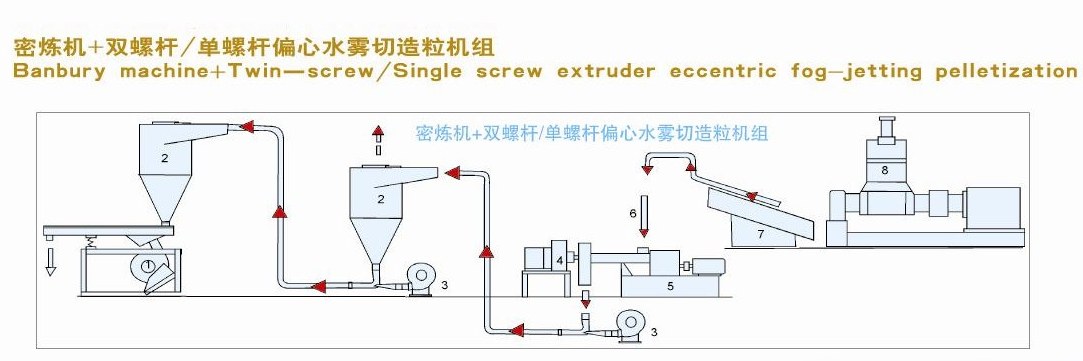
Used for: colour masterbatch and PE + carbon-black masterbatch; high-loading filling modification of PE, PP and EVA with calcium carbonate, talc and titanium powder; low-smoke halogen-free flame-retardant cable compound with aluminium hydroxide and magnesium hydroxide; semiconductor shielding cable compound in EVA; and PVC thermal-material modification.
Sequence: high-mixing machine → mixer feeder → SJSH twin-screw host → cooling wind belt → grinding machine → cyclone separator → contact cyclone separator → micro-powder recovery tower → muffler.
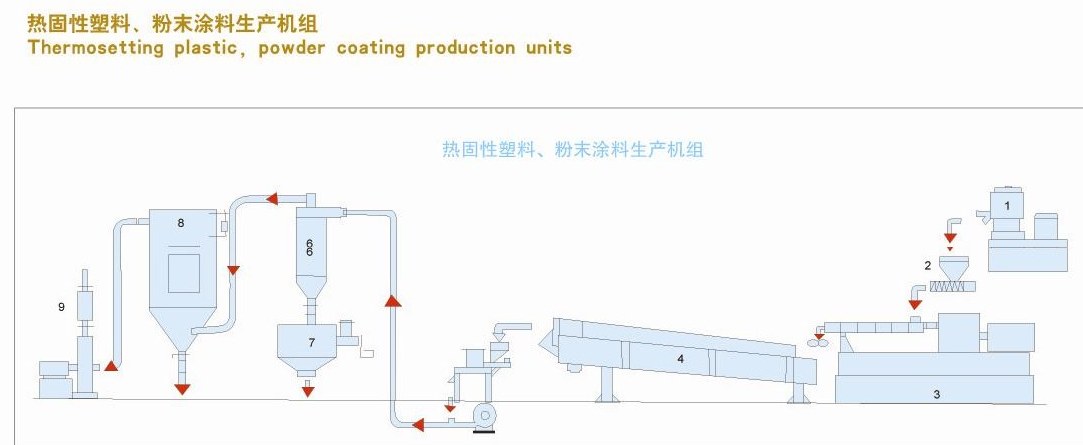
Used for: polyester and epoxy-acrylate powder coatings, phenolic moulding plastics and epoxy electrical sealing materials. The twin-screw mixes and plasticises the thermoset inside the machine without pressure build-up, then the compound is cooled, ground, polished, screened and classified downstream.
