FILM · PET · REPROCESSING
Plastic Recycling and Reclamation Lines
Preparation, reclamation and pelletizing systems for film and PET recycling workflows shown in the catalogue.
Processing challenge
Recycling feedstocks vary in contamination, moisture, bulk density and degradation. Stable feeding, filtration, venting and controlled melt temperature are essential.
Recommended equipment approach
The catalogue shows PET crushing, washing and drying equipment, plus single-screw film reclamation and pelletizing arrangements. System selection depends on feedstock form and contamination level.
Typical materials
- Post-industrial or post-consumer film
- PET flakes
- Thermoplastic regrind
- Printed or moisture-bearing feedstock, subject to testing
Pelletizing and downstream
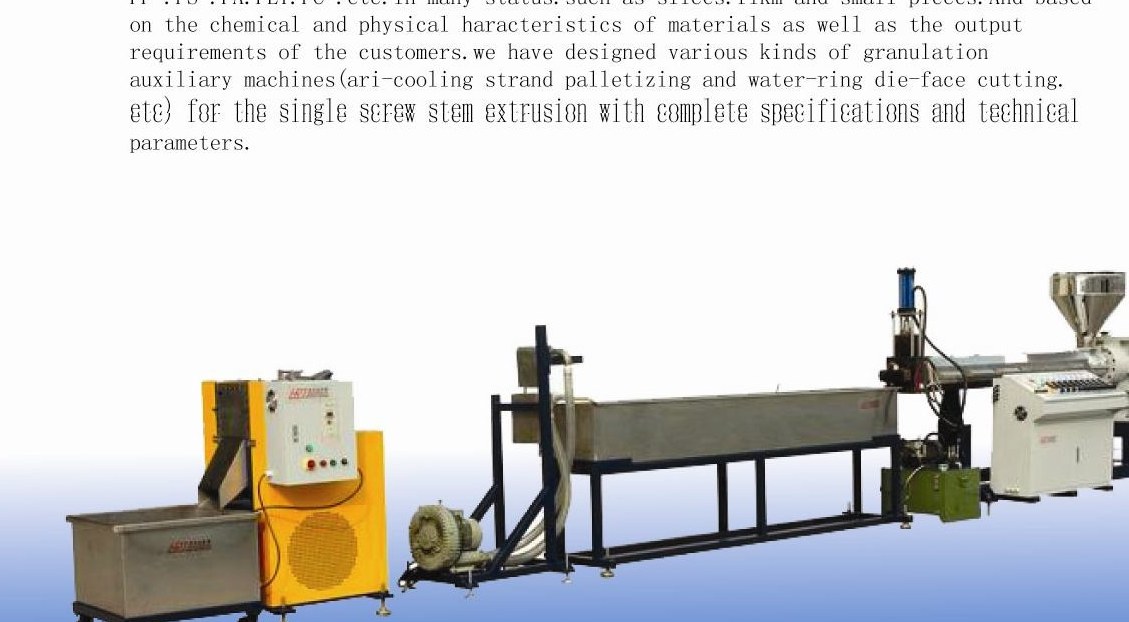
Film reclamation may use strand or die-face pelletizing with filtration and degassing. PET preparation includes crushing, washing, separation and drying before further processing.
Information required for quotation
- Feedstock type and photos
- Contamination and moisture levels
- Current washing or preparation process
- Required output and final pellet quality
- Filtration and devolatilization requirements
Line layouts
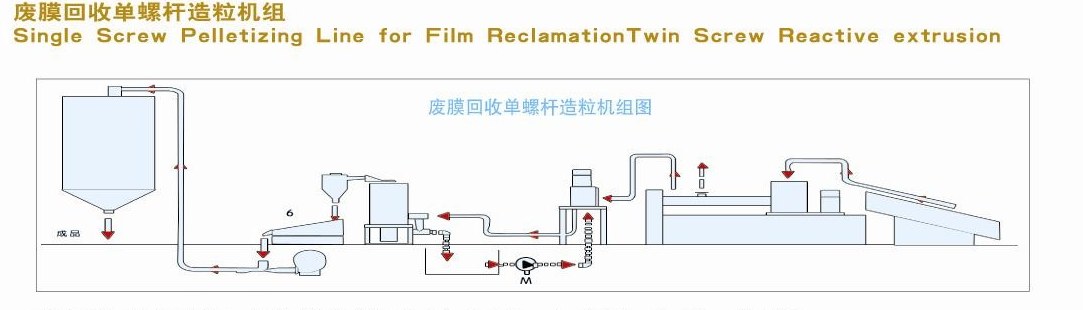
Film reclamation, single-screw pelletizing line
Baled or loose film is conveyed to a breaker, fed into a single-screw venting extruder, then cut by a vertical water-ring granulator. Dewatering and sieving follow before the pellets reach the product container. The line covers conveying, breaking, feeding, melting, plasticating, venting, pressure build-up, filtering and pelletizing in one pass, and is applicable to PE, PVC and PET film.
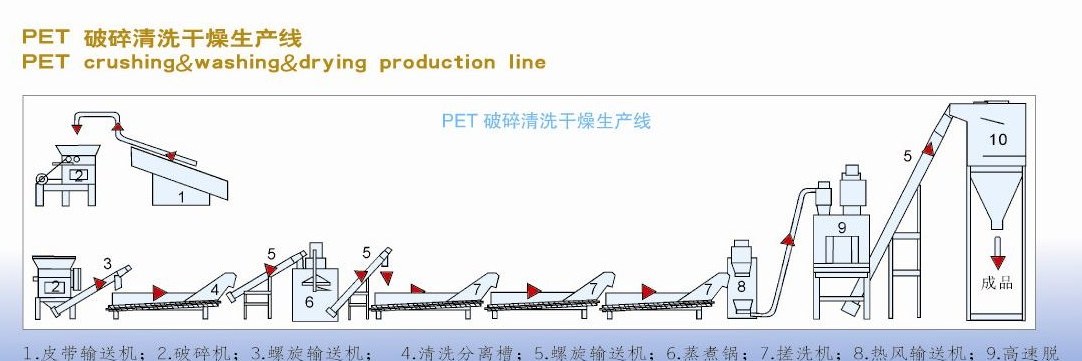
PET crushing, washing and drying line
For bottle and sheet PET, the line crushes, washes, cooks, friction-cleans and hot-air dries the flake before separation — producing clean, dry flake ready for pelletizing or direct use.
Machine sizes for recovered material
| Model | Screw diameter (mm) | L/D | Driving motor (kW) | Output (kg/h) |
|---|---|---|---|---|
| SJ-100 | φ100 | 20–32 | 45–55 | 100–200 |
| SJ-120 | φ120 | 20–32 | 55–75 | 150–250 |
| SJ-150 | φ150 | 20–32 | 75–90 | 200–300 |
| SJ-180 | φ180 | 20–32 | 90–132 | 250–400 |
| SJ-200 | φ200 | 20–32 | 160–280 | 600–800 |
Output depends on material form (film, flake, regrind), contamination level and moisture. Smaller sizes from SJ45 are available for lower throughputs.