PRODUCTS / SINGLE-SCREW EXTRUDERS
Robust single-screw extruders for film reclamation, low-shear pelletizing and second-stage discharge — a dependable choice where gentle conveying and pressure build-up matter more than intensive mixing.
SJ single-screw extruders convey, melt and pressurise polymer with low shear, making them well suited to reclaiming plastic film and post-industrial scrap, and to serving as the pressure-building second stage in tandem lines. A hydraulic screen changer keeps the melt clean during continuous running.
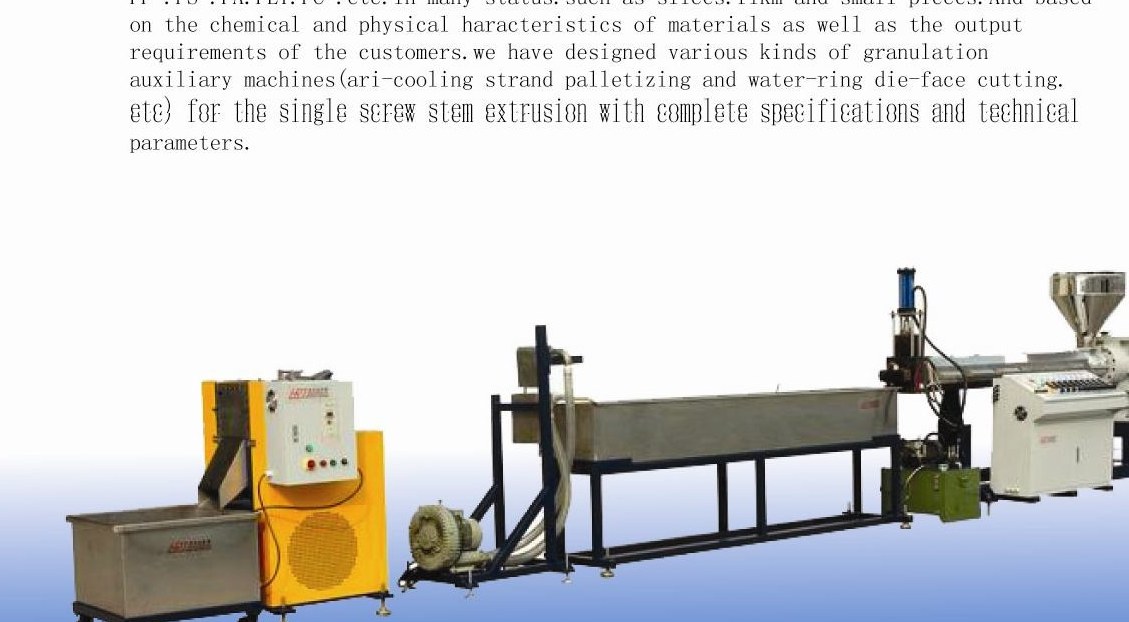
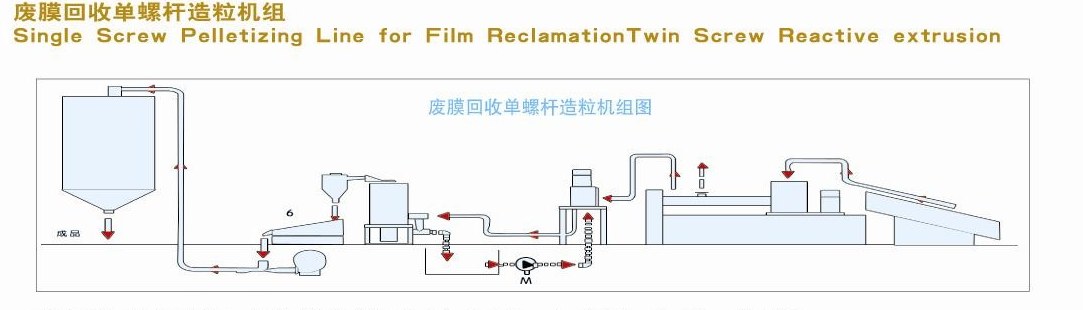
Model-by-model data for the SJ single-screw extruder pelletizing systems, built in five screw diameters from 100 to 200 mm.
| Model | Screw diameter (mm) | L/D | Driving motor (kW) | Screen changer | Output (kg/h) |
|---|---|---|---|---|---|
| SJ-100 | φ100 | 20–32 | 45–55 | Hydraulic | 100–200 |
| SJ-120 | φ120 | 20–32 | 55–75 | Hydraulic | 150–250 |
| SJ-150 | φ150 | 20–32 | 75–90 | Hydraulic | 200–300 |
| SJ-180 | φ180 | 20–32 | 90–132 | Hydraulic | 250–400 |
| SJ-200 | φ200 | 20–32 | 160–280 | Hydraulic | 600–800 |
Catalog reference values — indicative and material-dependent. Smaller diameters (from SJ45) are built for recovered-material pelletizing lines; the SJ45–180 range covers film, flake and regrind reclamation.
Build features: high-precision gearbox with high load capacity and low noise; barrel and screw geometry designed for uniform melting at low melt temperature; standard nitrided barrels and screws for corrosion and wear resistance, with bimetallic construction available for abrasive materials; silent blower barrel cooling with no routine maintenance; imported Japanese PID temperature control; and a die head available in manual-rotation or hydraulic pressure screen-changer form, so screen changes take a few minutes.
