PRODUCTS / TWIN-SCREW EXTRUDERS
A modular, intermeshing co-rotating twin-screw platform for compounding, masterbatch, filler incorporation, reinforcement and reactive extrusion — configurable from laboratory scale to high production output.
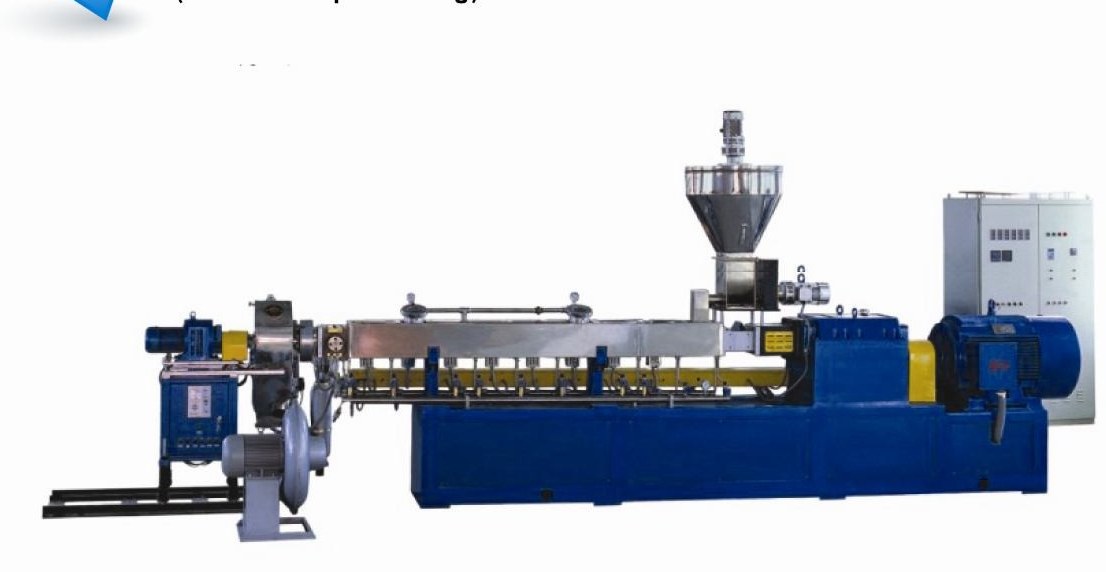
The SJSH series is built from modular screw elements and barrel sections mounted on splined shafts, so the process length can be arranged into conveying, melting, mixing, dispersing, homogenizing, devolatilization and pressure-building zones. Co-rotating, intermeshing screws are self-wiping, giving a narrow residence-time distribution and clean product changeovers. The same platform adapts to a wide range of compounds by changing screw geometry, feeding points and venting.
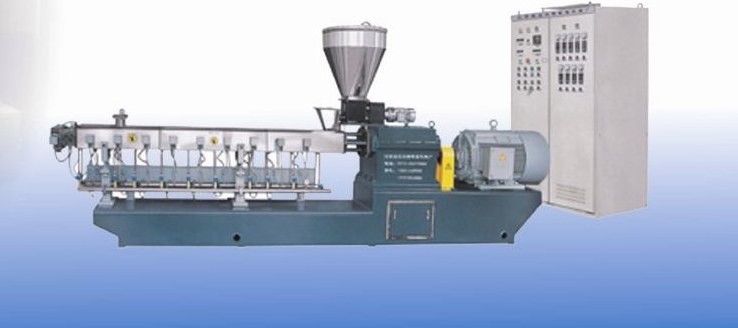
Material is metered into the feed throat, conveyed and melted, then mixed and dispersed through kneading and mixing elements. Fillers and fibers can be introduced downstream through a side feeder to protect fiber length. Volatiles are removed through atmospheric or vacuum vents before the melt is pressurised and delivered to the pelletizing stage. Screw configuration, barrel length (L/D), feed positions and venting are all specified to the compound.
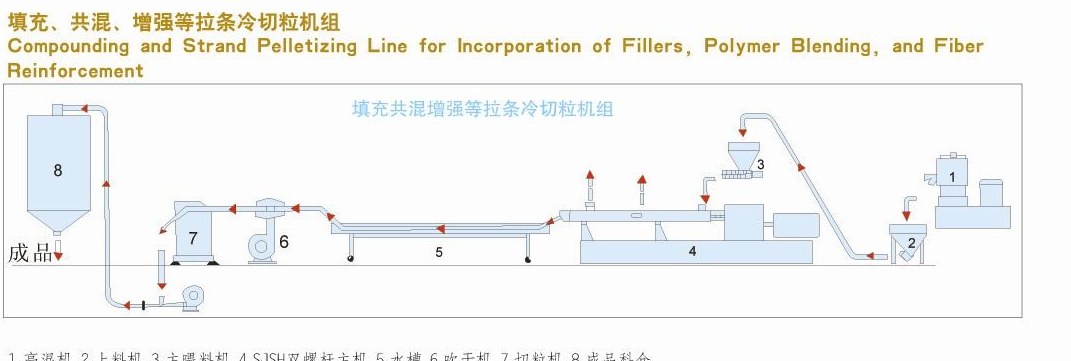
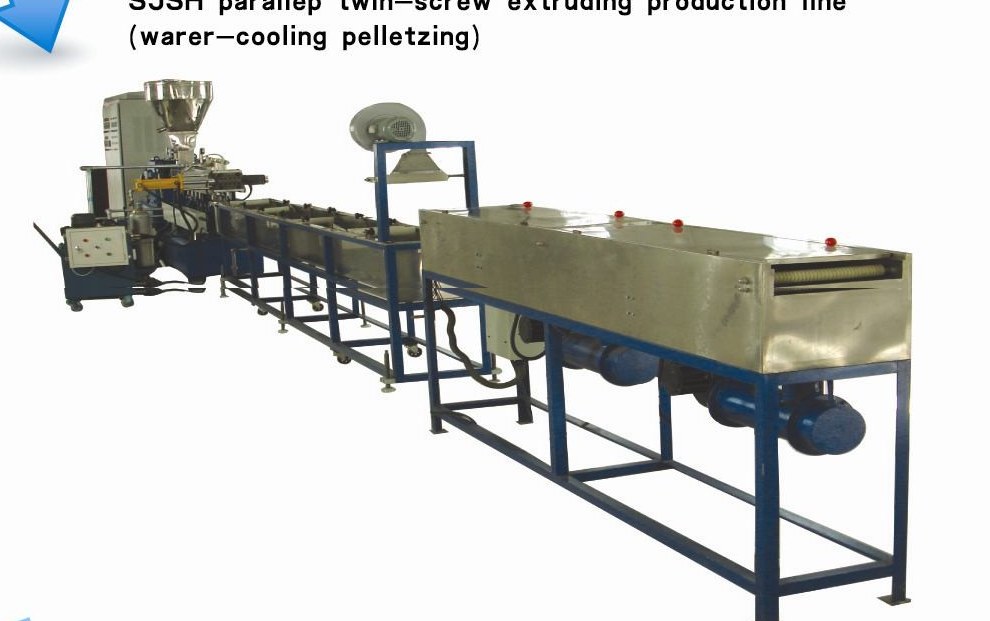
Available with water-cooled strand, air-cooled strand, air-cooled hot-face or water-ring hot-face pelletizing. Control options range from a standard operator panel to a simulated panel or PLC control, with lubrication, feeding, pressure and over-current interlocks. Voltage and frequency are built to your local supply.
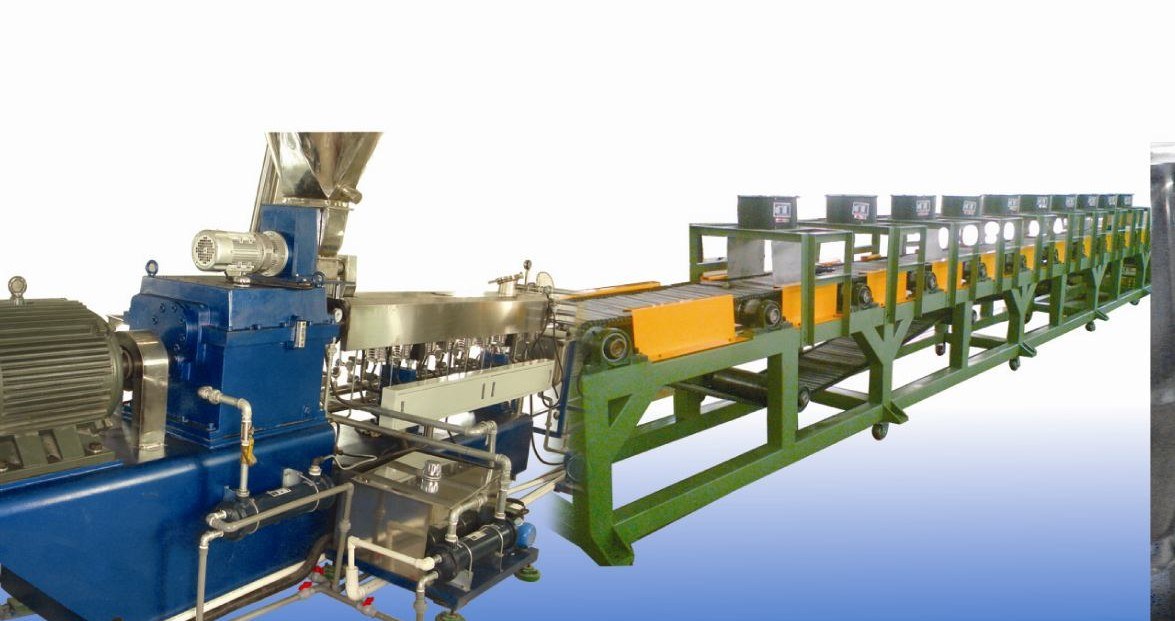
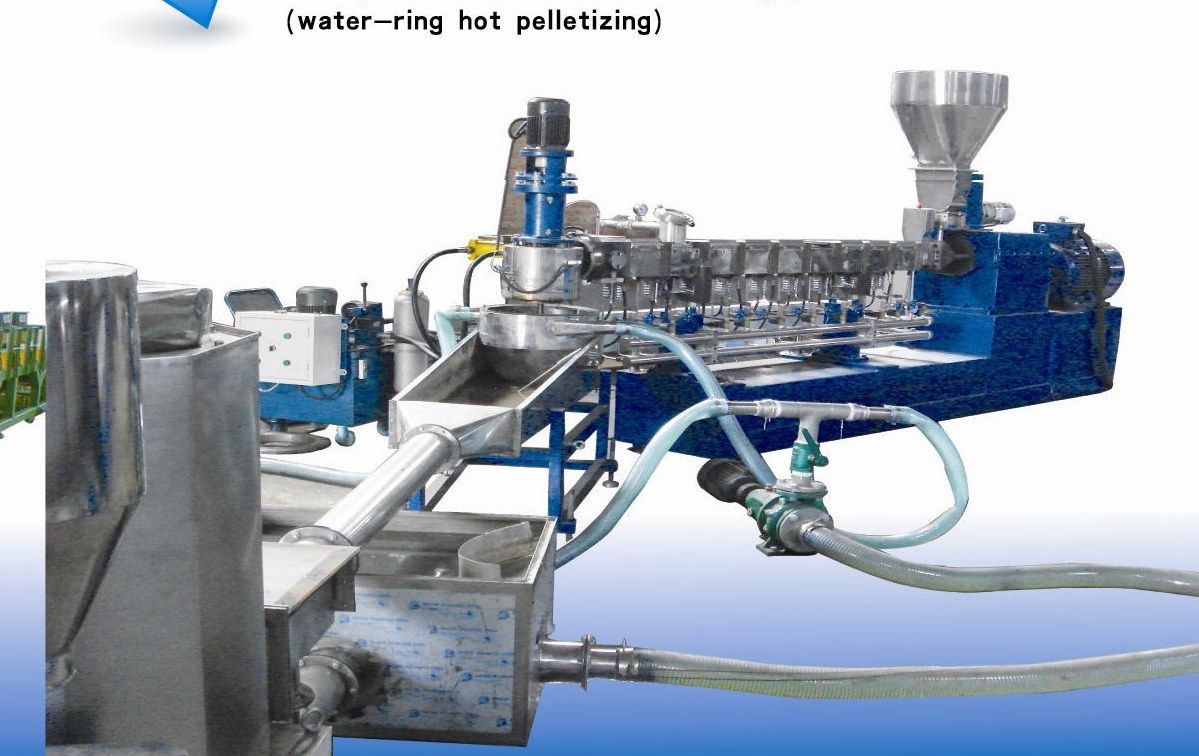
Model-by-model data for the SJSH co-rotating twin-screw series. D = screw diameter, L/D = screw length-to-diameter ratio, N = maximum screw speed, P = main motor power, T = screw torque per shaft, T/A³ = specific torque grade, Q = typical operating output.
| Model | D (mm) | L/D | N (r/min) | P (kW) | T (N·m) | T/A³ | Q (kg/h) |
|---|---|---|---|---|---|---|---|
| SJSH-20 | 22 | 32–64 | 600 | 4 | 30 | 4.8 | 0.5–15 |
| SJSH-25 | 25 | 32–64 | 600 | 5.5 | 44 | 4.8 | 5–15 |
| 600 | 7.5 | 60 | 6.5 | 15–20 | |||
| 600 | 11 | 88 | 9.5 | 20–30 | |||
| SJSH-30A | 30 | 32–64 | 400 | 7.5 | 80 | 4.5 | 5–30 |
| 600 | 11 | 85 | 4.7 | 5–40 | |||
| SJSH-35A | 35.6 | 32–64 | 400 | 11 | 125 | 4.6 | 30–55 |
| 600 | 15 | 115 | 4.2 | 45–75 | |||
| SJSH-40A | 41 | 32–64 | 400 | 22 | 250 | 6.0 | 65–110 |
| SJSH-40B | 41 | 32–64 | 600 | 30 | 225 | 5.5 | 90–150 |
| 800 | 45 | 255 | 6.2 | 135–225 | |||
| 1000 | 55 | 250 | 6.0 | 165–275 | |||
| SJSH-50A | 50.5 | 32–64 | 500 | 45 | 405 | 5.1 | 135–225 |
| SJSH-50B | 50.5 | 32–64 | 600 | 55 | 415 | 5.2 | 165–275 |
| 800 | 75 | 425 | 5.3 | 225–375 | |||
| 1000 | 90 | 405 | 5.1 | 270–450 | |||
| SJSH-65A | 62.4 | 32–64 | 400 | 55 | 620 | 4.4 | 165–275 |
| 500 | 75 | 675 | 4.8 | 225–375 | |||
| SJSH-65B | 62.4 | 32–64 | 600 | 90 | 675 | 4.8 | 270–450 |
| 800 | 110 | 620 | 4.4 | 330–550 | |||
| 1000 | 132 | 595 | 4.2 | 396–660 | |||
| SJSH-75A | 71 | 32–64 | 400 | 90 | 1015 | 4.7 | 270–450 |
| 500 | 110 | 1005 | 4.6 | 330–550 | |||
| 500 | 132 | 1190 | 5.5 | 396–660 | |||
| SJSH-75B | 71 | 32–64 | 600 | 132 | 990 | 4.6 | 396–660 |
| 800 | 160 | 900 | 4.2 | 480–800 | |||
| SJSH-95A | 93 | 32–64 | 400 | 250 | 2815 | 5.9 | 750–1250 |
| 500 | 250 | 2250 | 4.8 | 840–1400 | |||
| SJSH-95B | 93 | 32–64 | 600 | 315 | 2365 | 5.0 | 945–1575 |
| 800 | 400 | 2250 | 4.7 | 1200–2000 | |||
| SJSH-135A | 133 | 32–48 | 400 | 550 | 6190 | 4.6 | 1650–2750 |
| 500 | 750 | 6750 | 5.1 | 2250–3750 |
Catalog reference values — indicative and formulation-dependent. Output figures assume a typical compound; the model is confirmed against your material, filler loading and required kg/h. Series letters denote the torque/speed class: A normal (n ≤ 500 r/min), B high speed (n ≥ 600 r/min), C high torque, D high speed and high torque.
Model selection depends on your compound and target output. Smaller diameters suit laboratory and pilot work; larger diameters and higher-torque configurations serve production. Share your formulation and required kg/h and we will recommend a model.
Yes. The modular screw and barrel design lets you reconfigure the machine for different products, and the self-wiping screws support clean changeovers between compounds.
Water-cooled strand pelletizing is commonly used for glass- and mineral-filled compounds. We confirm the method against your material, output and pellet requirements.
